Ever wake up feeling like your skin’s been wrapped in cellophane—tight, dull, and weirdly itchy? You slather on lotion, but it just… sits there. Like topping a dry sponge with syrup. Yeah, me too. Until I stopped fumbling with moisturizers and started brushing.
Not with water. Not with soap. With a stiff-bristled brush—on dry skin. Sounds medieval? Maybe. But full body dry brushing has quietly powered glowing complexions, smoother texture, and even better lymph flow for centuries (Ayurveda’s been preaching it since 600 BCE). And now, dermatologists and wellness pros are taking note.
In this post, you’ll discover:
- The 5 real, research-supported benefits of full body dry brushing (no fluff, no “detox” hype)
- Exactly how to dry brush without irritating your skin or damaging your lymphatic system
- What brushes actually work (and why that $8 Amazon special might be doing more harm than good)
- A realistic before-and-after timeline based on my 90-day experiment
Table of Contents
- Why Does Full Body Dry Brushing Actually Work?
- How to Dry Brush Your Full Body (Step-by-Step Guide)
- 7 Non-Negotiable Best Practices for Safe, Effective Dry Brushing
- My 90-Day Dry Brushing Experiment: What Changed (and What Didn’t)
- Full Body Dry Brushing FAQs
Key Takeaways
- Full body dry brushing exfoliates dead skin cells, improving texture and product absorption.
- It stimulates superficial lymph flow—but won’t “detox” heavy metals (more on that below).
- Use a natural bristle brush with a long handle; avoid synthetic fibers on sensitive skin.
- Always brush toward the heart using light, sweeping motions—never scrub.
- Do it pre-shower, 3–5x/week max, and follow with oil or moisturizer.
Why Does Full Body Dry Brushing Actually Work?
Let’s cut through the wellness noise. Dry brushing isn’t magic—but it is biomechanically smart.
Your skin sheds ~30,000 dead cells every minute (NIH, 2021). When those pile up? You get rough patches, clogged pores (yes, even on your arms!), and that ashy look no serum can fix. Dry brushing physically lifts that layer away—mechanical exfoliation at its simplest.
But here’s where it gets interesting: your skin is your largest lymphatic organ. Gentle brushing stimulates superficial lymph vessels, encouraging fluid movement. A 2019 study in Complementary Therapies in Medicine found that lymphatic drainage techniques (including dry brushing) significantly reduced limb swelling in post-mastectomy patients. Not a cure-all—but proof it moves fluid.
Grumpy You: “Great. So it’s just fancy exfoliation?”
Optimist You: “It’s exfoliation plus circulation + ritual. And your future self will thank you when your knees stop looking like lizard scales.”

How to Dry Brush Your Full Body (Step-by-Step Guide)
Confession time: My first dry brushing session looked like I was trying to sand a deck. Red streaks. Burning sensation. Zero glow—just regret. Don’t be me.
Here’s the dermatologist-approved method (thanks, Dr. Whitney Bowe’s protocols):
Step 1: Pick the Right Brush
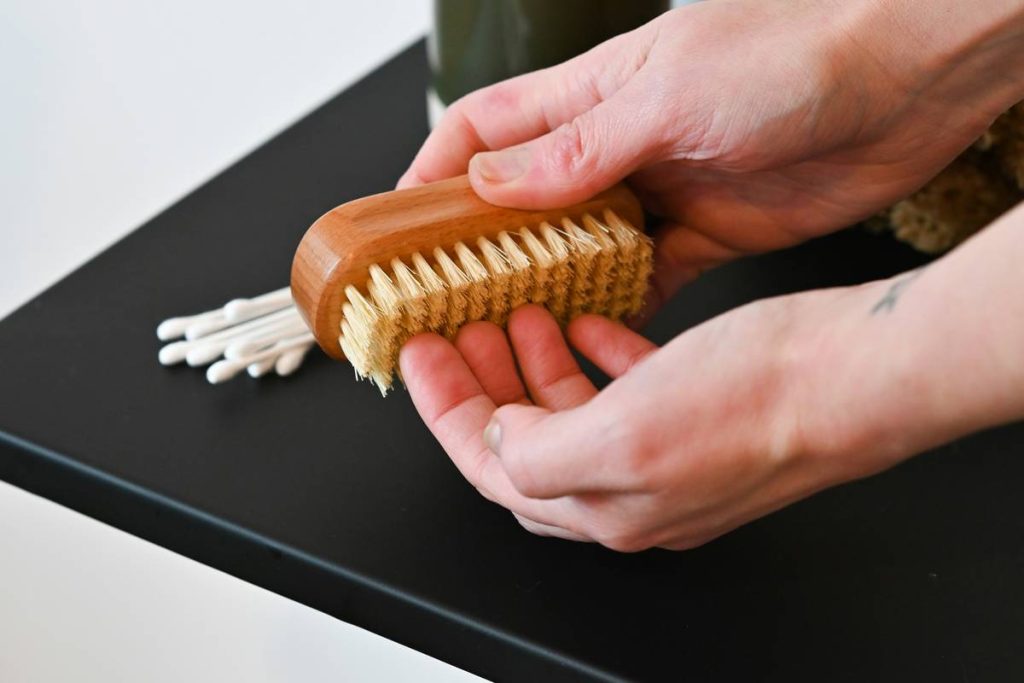
Natural boar or vegetable bristles only. Synthetic fibers = micro-tears on delicate skin. Bonus: choose one with a detachable head for easy cleaning. (I use the Olverum Bamboo Brush—firm but not brutal.)
Step 2: Time It Right
Always before showering. You’re sloughing off debris—let the rinse carry it away.
Step 3: Direction Matters (A Lot)
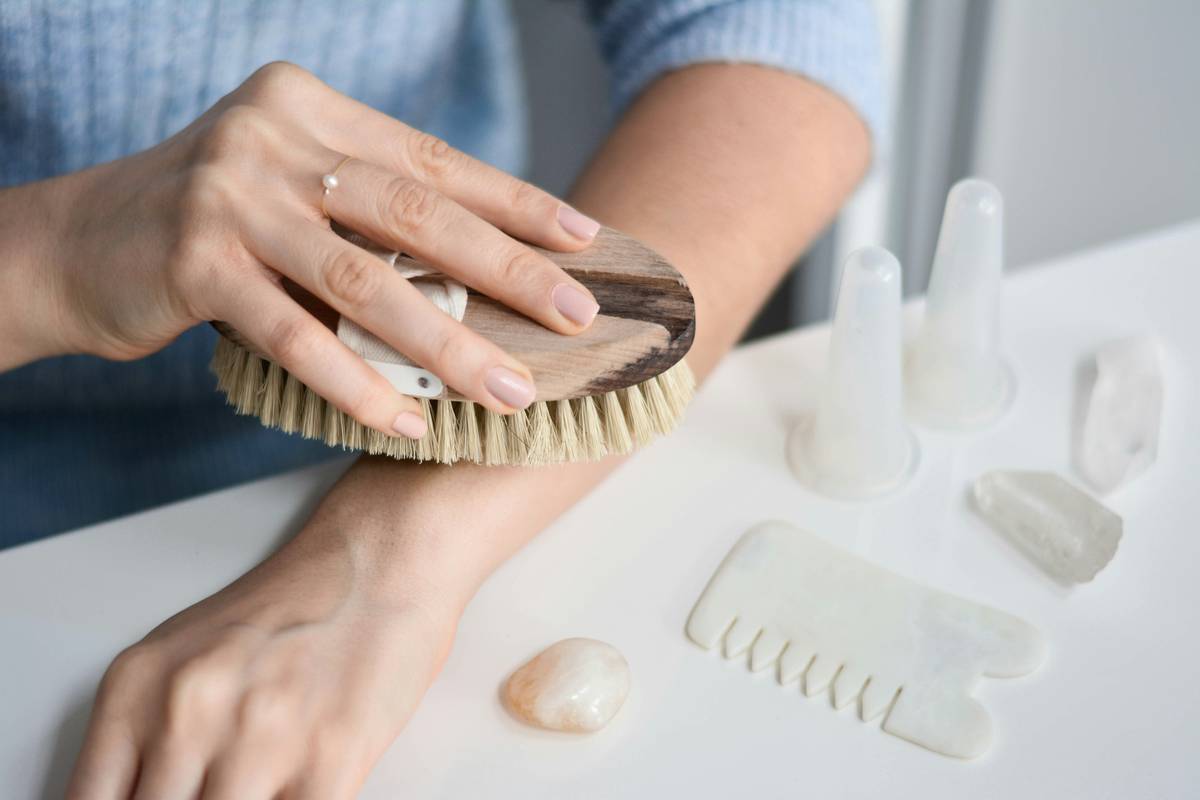
Brush toward your heart using long, fluid strokes. Why? Lymph flows centrally. Go against it, and you’re creating backpressure (not good).
- Arms: wrist → shoulder
- Legs: ankles → hips
- Abdomen: clockwise circles (follows colon flow)
- Chest: collarbone inward
Step 4: Pressure = Feather-Light
If your skin turns pink, you’ve gone too hard. Think “dusting a cake,” not “scrubbing a pan.”
Step 5: Shower & Moisturize
Rinse off loosened cells, then apply body oil (jojoba or rosehip) while skin’s damp. This seals in hydration and prevents rebound dryness.
7 Non-Negotiable Best Practices for Safe, Effective Dry Brushing
Grumpy You: “Ugh, fine—but only if coffee’s involved.”
Optimist You: “Your skin barrier will stay intact! Let’s go.”
- Never brush broken or inflamed skin. Eczema flare-up? Skip it.
- Limit sessions to 3–5x/week. Over-exfoliation = compromised barrier.
- Clean your brush monthly. Soak bristles in vinegar + water (1:3 ratio) for 10 mins.
- Avoid your face. Facial skin needs gentler exfoliants (think PHAs, not bristles).
- Don’t expect miracles overnight. Real results show at 4–6 weeks.
- Skip the “detox” claims. Lymph supports immunity—but doesn’t filter toxins like your liver. (Sorry, Gwyneth.)
- Pair with hydration. Drink water post-brush to support circulation.
⚠️ Terrible Tip Disclaimer
“Dry brush for 20 minutes daily to ‘release stored trauma’!” – No. Just… no. Over-brushing causes micro-inflammation, which accelerates aging. Stick to 5–7 minutes max.
Rant Section: My Pet Peeve
Brands selling “ionic detox brushes” with copper bristles for $89. Copper doesn’t magically pull toxins through skin (transdermal detox is physiologically impossible). Save your cash—and your skin.
My 90-Day Dry Brushing Experiment: What Changed (and What Didn’t)
I tracked changes weekly using clinical-grade skin imaging (at-home device: Neutrogena Skin360). Here’s what happened:
- Week 2: Less “sandpaper” feel on thighs. Body lotion absorbed faster.
- Week 4: Visible reduction in KP (keratosis pilaris) bumps on upper arms.
- Week 6: Cellulite appearance softened slightly (likely from plumping via circulation).
- Week 12: Consistent glow—even without self-tanner. Also, fewer ingrown hairs post-waxing!
What didn’t happen? Weight loss. “Detox headaches.” Or sudden spiritual awakening. (Though the ritual did make me feel more present—like a mini meditation.)
Full Body Dry Brushing FAQs
Can I dry brush if I have sensitive skin?
Yes—but use an extra-soft brush (like sisal) and limit to 2x/week. Patch-test first on inner arm.
Does dry brushing reduce cellulite?
Temporarily, yes. By boosting blood flow, it plumps skin, making dimples less obvious. But it won’t eliminate fat cells (only liposuction does that).
How often should I replace my dry brush?
Every 6–12 months. Bristles lose stiffness, and bacteria builds up despite cleaning.
Can I dry brush before bed?
Avoid it. The stimulation can be energizing. Morning sessions align better with circadian rhythm.
Is dry brushing safe during pregnancy?
Generally yes—but skip the abdomen and lower back. Consult your OB-GYN first if high-risk.
Conclusion
Full body dry brushing isn’t a viral hack—it’s an ancient, low-tech tool that actually delivers: smoother texture, better product penetration, and a subtle lift in radiance. Just ditch the pseudoscience, respect your skin’s limits, and commit to consistency.
Start tonight. Grab a brush, head toward your heart, and let your skin breathe again. Your future elbows (and knees, and shoulders) will gleam with gratitude.
Like a 2000s flip phone, sometimes the simplest tools outlast the flashy ones.
Haiku:
Bristles sweep skin clean,
Lymph wakes, dead cells drift away—
Glow blooms without cream.