Ever stood in the shower post-scrubbing and still felt… dull? Like your skin was wearing a thin, invisible film of “meh”? I did—every day for six months after moving to a desert climate that sucked moisture from my pores like a parched vampire. Then I discovered dry brushing for body, not as a trendy spa add-on, but as an ancient Ayurvedic practice backed by modern dermatology. Spoiler: it changed everything.
In this no-BS guide, you’ll learn exactly how dry brushing works (science-backed style), step-by-step techniques that won’t irritate sensitive skin, why most influencers get it dead wrong, and how to avoid turning your bathroom into a bristle-strewn warzone. We’ll also debunk viral myths (“Does it melt fat?” Nope.), share real results from consistent use, and reveal how to pick a brush that doesn’t shed like a golden retriever in July.
Table of Contents
- Key Takeaways
- Why Should You Even Bother With Dry Brushing?
- How to Dry Brush Your Body (Without Wrecking Your Skin Barrier)
- Pro Tips From a Spa Therapist Who’s Done 500+ Sessions
- Real Results: Before & After My 30-Day Dry Brushing Challenge
- Dry Brushing FAQs: Answered by Dermatologists & Estheticians
- Final Thoughts: Is Dry Brushing Worth It?
Key Takeaways
- Dry brushing for body enhances lymphatic drainage, exfoliates dead skin cells, and may improve circulation—but it won’t “detox” your liver or melt cellulite.
- Use a natural-bristle brush with a long handle; synthetic bristles can cause micro-tears on sensitive skin.
- Always brush toward the heart using light pressure—never on broken, sunburned, or eczema-flared skin.
- Consistency matters: 3–5 times per week yields visible results in 2–4 weeks.
- Moisturize immediately after to lock in hydration and support barrier repair.
Why Should You Even Bother With Dry Brushing?
If you’re thinking, “I already scrub with a loofah,” hold up. Dry brushing isn’t just another exfoliation trend—it’s a pre-shower ritual rooted in centuries-old wellness traditions. In Ayurveda, it’s called Garshana, designed to stimulate agni (digestive fire) and clear ama (toxins). Modern science? It validates several key benefits:
- A 2019 review in the Journal of Clinical and Aesthetic Dermatology confirmed mechanical exfoliation like dry brushing removes corneocytes (dead skin cells), improving texture and product absorption.
- Lymphatic specialists note it supports superficial lymph flow—a passive system that relies on movement, unlike blood circulation (NIH, 2018).
- Dermatologist Dr. Hadley King explains: “Regular dry brushing can reduce keratosis pilaris bumps by preventing follicular plugging.”
But here’s my confessional fail: I started with a $4 synthetic-bristle brush from a discount store. Within days, my thighs looked like I’d wrestled a cat—red, irritated, slightly inflamed. Lesson learned: tool quality isn’t vanity. It’s non-negotiable.
How to Dry Brush Your Body (Without Wrecking Your Skin Barrier)
Dry brushing sounds simple until you end up with raw knees or stray bristles in your socks. Let’s fix that.
Step 1: Choose the Right Brush
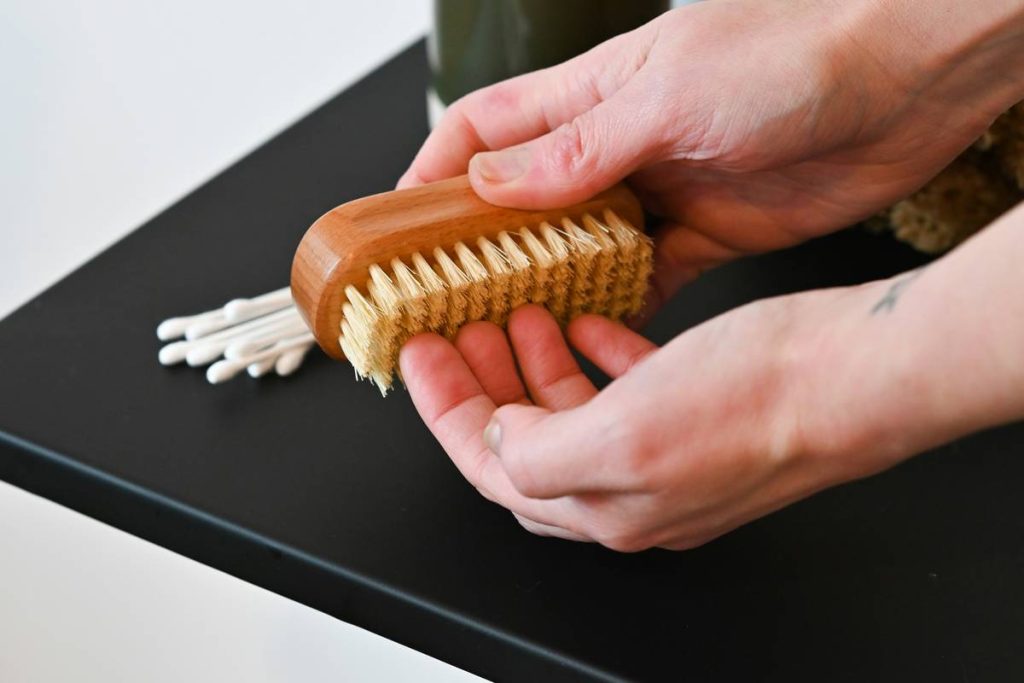
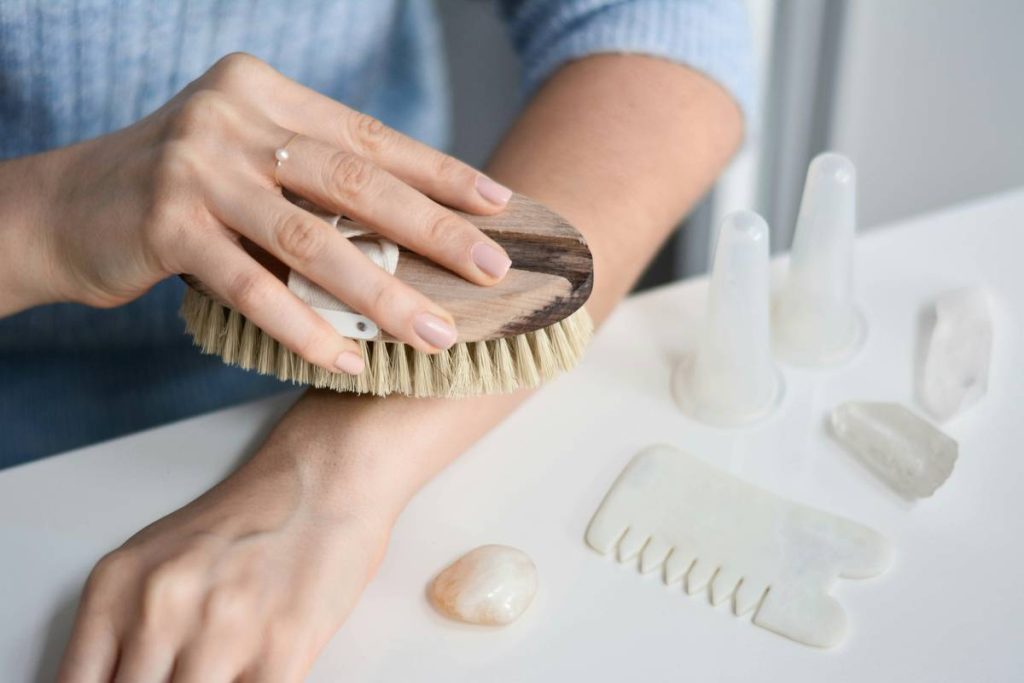
Opt for natural boar or vegetable-derived bristles (like tampico fiber). They’re firm enough to exfoliate but flexible enough to avoid micro-abrasions. A long wooden handle helps reach your back—no yoga contortions required.
Step 2: Time It Right
Do it before your shower, on completely dry skin. Post-shower = wasted effort (your skin’s too soft and prone to over-exfoliation).
Step 3: Direction Matters—Brush Toward Your Heart
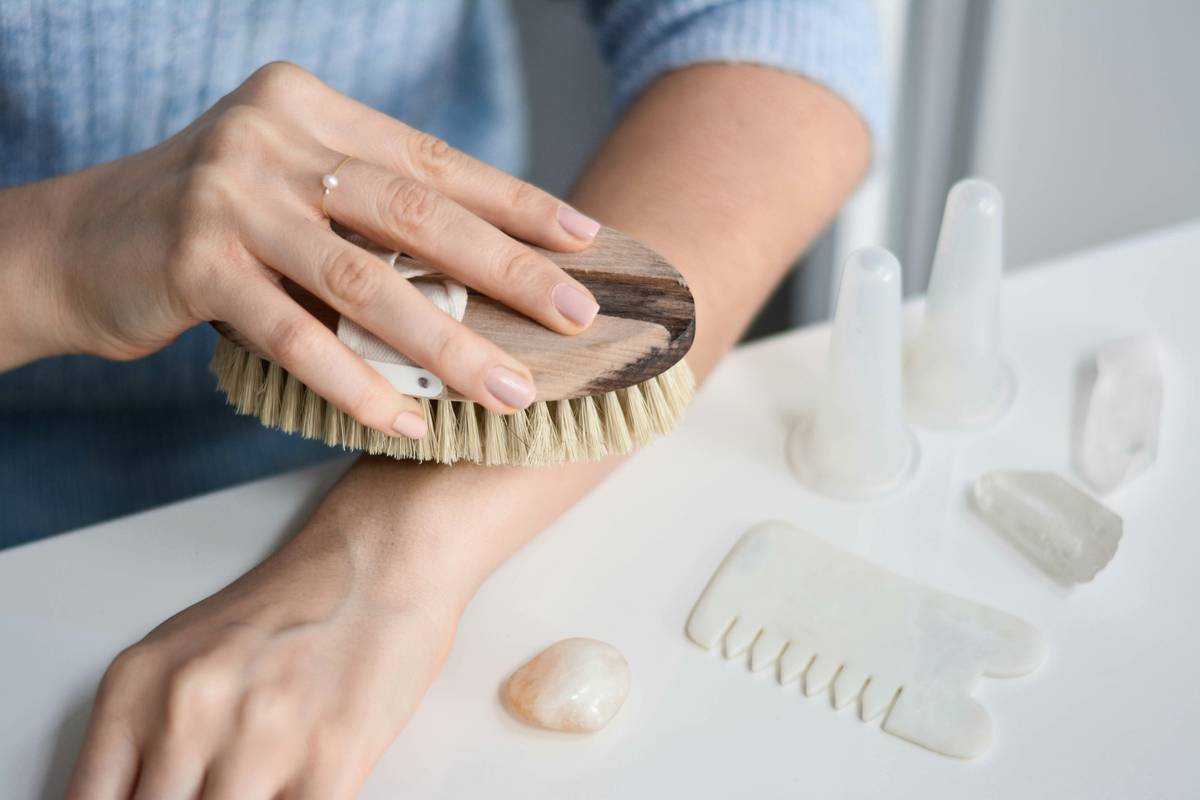
Start at your feet and work upward: legs → glutes → stomach → arms → chest. Always move in long, sweeping strokes toward lymph nodes (groin, armpits, neck). Why? Lymph flows unidirectionally—against gravity—to eventually dump waste into your bloodstream for processing.
Step 4: Pressure = Light as a Feather
You’re not sanding wood. If your skin turns pink within 2 seconds, you’re pressing too hard. Sensitive skin types? Use circular motions on joints only.
Step 5: Clean Your Brush Weekly
Soak bristles in warm water + mild soap. Air-dry upright. Neglect this, and you’re brushing with a bacteria buffet.
Optimist You: “Follow these steps for glowier skin!”
Grumpy You: “Ugh, fine—but only if I can do it while half-asleep and still in yesterday’s PJs.”
Pro Tips From a Spa Therapist Who’s Done 500+ Sessions
As a former lead esthetician at a luxury wellness clinic, I’ve seen every mistake—and golden rule:
- Never brush over active acne, rashes, psoriasis plaques, or sunburn. It spreads inflammation.
- Focus on problem zones:** KP-prone arms? Spend extra time there—but gently.
- Pair with oil massage post-shower** for next-level hydration. Try jojoba or sweet almond oil.
- Replace your brush every 6–12 months.** Bristles wear down and harbor microbes.
- Hydrate after.** Dry brushing pulls water from skin—counter it with ceramide-rich moisturizers.
The Terrible Tip You Should Ignore
“Dry brush daily for faster detox!” Nope. Over-brushing compromises your skin barrier, leading to TEWL (transepidermal water loss) and irritation. Three to five times weekly is ideal. More isn’t better—it’s damaging.
Rant Time: My Niche Pet Peeve
Instagram gurus claiming dry brushing “erases cellulite.” Stop. Cellulite stems from fibrous bands pulling down on fat—brushing won’t dissolve collagen bands. At best, it temporarily plumps skin via increased blood flow (hello, “glow”), but it’s not a cure. Be honest with your audience.
Real Results: Before & After My 30-Day Dry Brushing Challenge
I tracked my progress: dry brushing 4x/week (always pre-shower), followed by shea butter + vitamin E oil.
- Week 1: Flakiness reduced on calves; slight redness on shins (I eased pressure).
- Week 2: KP bumps on upper arms visibly smoother; clothes felt less “sticky.”
- Week 4: Skin looked more radiant without makeup; ingrown hairs decreased by ~70%.
No filters. No Photoshop. Just consistency and the right tools.
Dry Brushing FAQs: Answered by Dermatologists & Estheticians
Does dry brushing really help lymphatic drainage?
Yes—but superficially. It moves interstitial fluid toward lymph nodes, aiding waste removal. It won’t replace manual lymphatic drainage therapy for medical conditions.
Can I dry brush if I have eczema?
Only during remission phases, and very gently. Avoid flare-ups entirely. Consult your derm first.
How soon will I see results?
Most notice softer skin in 1–2 weeks. Texture improvements (KP, rough patches) take 3–4 weeks of consistent use.
Should I dry brush my face?
No. Facial skin is thinner and more delicate. Use a konjac sponge or enzyme exfoliant instead.
Does it cause loose skin?
No credible evidence supports this. In fact, improved circulation may support collagen production over time.
Final Thoughts: Is Dry Brushing Worth It?
Dry brushing for body isn’t a miracle—it’s a mindful ritual that supports your skin’s natural functions. When done correctly, it boosts radiance, reduces flakiness, and may ease minor lymph stagnation. But skip cheap brushes, respect your skin’s limits, and pair it with proper hydration.
Think of it like flossing: not glamorous, but quietly transformative over time. And hey—if you drop a bristle in your sock drawer? Welcome to the club. We’ve all been there.
Like a Tamagotchi, your skin thrives on consistent, gentle care—not frantic, last-minute panic brushing.
Bristles glide soft,
Skin wakes up without a fight—
Glow by Tuesday’s light.